
Orthodontics is a field of dentistry aimed at correcting alignment problems of teeth and jaws. It is important for both aesthetic and functional health. Orthodontic treatment eliminates malocclusion problems by aligning teeth and jaws with various appliances. The main benefits of this treatment include:
A healthy bite
Reducing tooth decay
Protecting gum health
Ease of chewing and speaking
Improving oral hygiene
Preventing facial asymmetry
Another important aspect of orthodontics is its aesthetic effect. Treatment that improves facial aesthetics increases self-confidence and has positive effects in social life and work environments. Advancing digital technologies make orthodontic care accessible to all age groups, while speeding up the treatment process and offering a more comfortable and reliable experience for patients.
Orthodontic treatment is performed with removable or fixed appliances. Treatment with removable appliances is done with clear aligners or devices called appliances that the patient can put in and take out of the mouth. This method is used to correct simple crowding, gaps between teeth, to widen jaws at an early age, and to treat upper and lower jaw discrepancies with functional appliances.
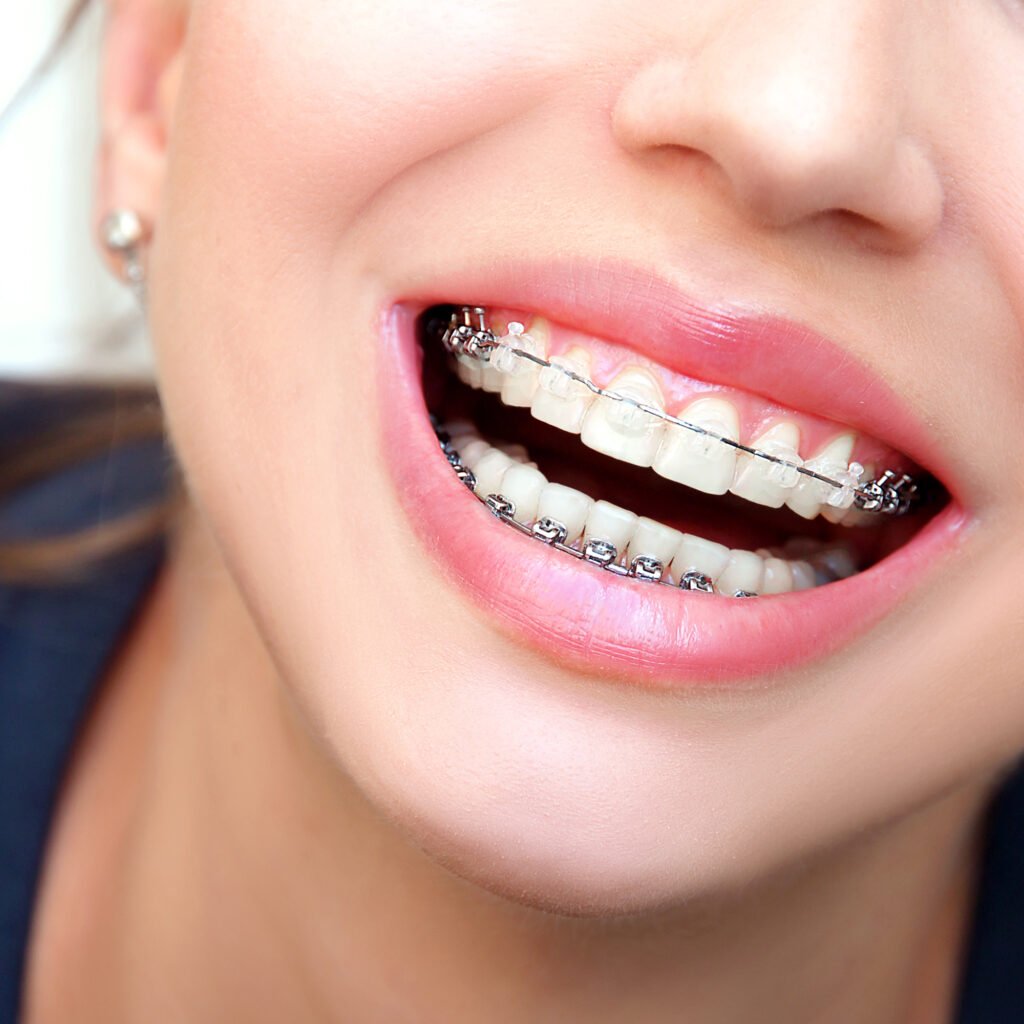
In fixed treatment, brackets, which are fixed to the teeth and cannot be removed by the patient, are used. Brackets can be metal or ceramic. By applying force with special wires and elastics, the teeth are moved, correcting crowding.
Additionally, for the treatment of some jaw problems, chin guards and headgear attachments are used from outside the mouth to correct jaw discrepancies.
Orthodontic treatment is suitable for individuals of all ages who have crowding in their tooth alignment, experience jaw bite disorders, or want to have an aesthetically pleasing smile. Misaligned teeth on the jawbone, gaps between teeth, and misalignment of the upper and lower jaws are the primary reasons for orthodontic intervention.
Orthodontic treatment has evolved to meet the needs and lifestyles of individuals, as well as their comfort and aesthetic expectations. In addition to traditional approaches, modern methods, thanks to technological innovations, have made the treatment process more personalized and effective.
These methods are applied with appliances that are permanently bonded to the teeth and cannot be removed by the patient. They have a high success rate, especially in cases requiring complex tooth movements.
Metal Braces: This is the most common and well-known orthodontic treatment method. It offers a durable and effective option. Brackets made of stainless steel and wires passing through these brackets apply a continuous and controlled force to the teeth, ensuring they are in the correct position.
Clear (Porcelain or Ceramic) Braces: This is an ideal alternative, especially for adults and teenagers with aesthetic concerns. Made from tooth-colored or translucent materials, these brackets are less noticeable than metal braces. This creates a more aesthetic appearance throughout the treatment process.
Lingual Braces: These consist of special brackets and wires placed on the inner surface of the teeth, on the tongue side, rather than the visible front surface. This method prevents the brackets from being visible from the outside and offers ideal privacy, especially for individuals who prioritize aesthetics in their professional or social lives. Removable Orthodontic Treatments
The appliances used in these treatment methods are designed to be removed and reinserted by the patient. They are used in the treatment of simpler cases or to prepare the jaw before fixed treatment.
Clear Aligners (such as Invisalign): These are removable and clear aligner sets specifically designed to move teeth. Digitally designed, these aligners are replaced with new ones every few weeks, gradually moving the teeth to the correct position. They are quite popular due to their comfort, ease of oral hygiene, and aesthetic appearance. Functional Aligners: These are generally used in children and adolescents to guide jaw development. These appliances improve facial profile and bite by correcting discrepancies between the upper and lower jaws. They are available in both fixed and removable forms.
Sometimes additional appliances or procedures may be used to increase the success of orthodontic treatment and shorten the process.
Intraoral and Extraoral Appliances: These are additional appliances designed for specific situations. For example, extraoral appliances such as Headgear are used to control jaw growth, while intraoral appliances such as expansion appliances expand the upper jaw to create space for teeth.
Mini Screws: These are small screws temporarily placed in the jawbone to allow for controlled movement of more complex teeth. These screws prevent teeth from moving in unwanted directions.