
It would be pointless to understand root canal treatment without knowing the structure of the tooth. A tooth consists of three layers: enamel, dentin, and pulp. These layers are arranged from the outside to the inside, forming the three main parts of the tooth. The root canal, located in the center of each tooth, is the name given to the cavity within the tooth. The soft tissue inside the root canal is called the pulp. The pulp is filled with blood vessels and nerves that play a vital role in the tooth’s nourishment.
Root canal treatment is one of the most important factors in preventing tooth loss and extraction. Before this treatment, which has become widely used recently, teeth were directly extracted when they decayed or became infected. In contrast, root canal treatment cleans the infected pulp layer and restores it to the tooth’s structure.
During root canal treatment, the nerves within the pulp are removed during the cleaning process. However, the tooth can continue to function without any problems after this procedure. This is because the nerves in the pulp layer of the tooth only provide hot and cold sensations in adults. They have no other known significant function.
Root canal treatment can sometimes be completed in one session, while in other cases it may take two sessions. This depends on the extent of the decay in the tooth. In addition, it is rare for root canal treatment to be completed in three sessions. To perform root canal treatment, a person must be an endodontist or dentist. Endodontists are dentists specializing in root canal treatment.
The first step in performing root canal treatment is taking an X-ray to see the condition of the root canals. This X-ray also shows any bone infection around the decayed tooth. After this procedure, the specialist doctor administers local anesthesia. Because the tooth and surrounding nerves are numbed by local anesthesia, the patient does not feel any pain. After the tooth and surrounding area are numbed, the doctor places a waterproof substance around the tooth. The purpose of this is to prevent the tooth and its surroundings from getting wet.
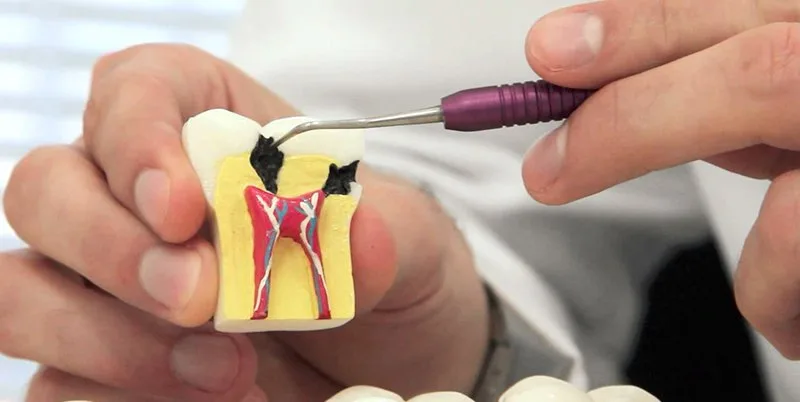
Next, a hole is drilled in the tooth to reach and treat the infected area. An instrument inserted through this hole is used to clean out the infection and bacteria. Additionally, the nerve tissue inside the tooth is removed. To perform the root canal treatment, the hole is widened. A file-like instrument is used to widen the hole, minimizing damage to the tooth. This stage of root canal treatment is called filing. Since there are no nerves in the tooth, filing is naturally painless. During this treatment, water and sodium hypochlorite are periodically poured into the mouth to clean any remaining particles. This prevents any residue from accumulating.
After the root canal treatment is complete, the hole should be closed. However, dentists are divided on this issue. Some argue that the hole should be closed the same day, while others say it should be temporarily closed and, if no problems are detected after a week, it should be permanently closed. A type of rubber compound is used to seal the hole in the tooth. Sealing the hole is crucial, both to prevent dirt and bacteria from entering the hole and to preserve the tooth’s strong structure.
Before sealing the hole, it is checked whether the inside of the hole is dry. Then, the depth of the root canal is measured. If the rubber material placed inside the hole protrudes, the excess is trimmed. This rubber material seals the main hole of the canal, but it will not be sufficient to prevent leakage. Therefore, the seal is reinforced with various mixtures. After the root canal treatment is completed, the decay in the tooth is also treated. This process is more commonly known as filling. After the filling is done, the strength and permanence of the root canal treatment are increased. The patient can go home the same day all procedures are completed.